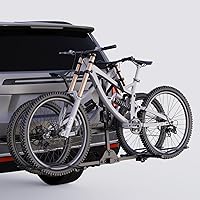
How to Choose an E-Bike Rack for Your Hitch
Choose an e-bike hitch rack by matching its capacity and fit to your bikes and vehicle. Check each bike's weight, the hitch receiver size, tire width and wheelbase, then compare the loaded rack weight with your vehicle's tongue-weight limit.
On this page (6 sections)
Choose an e-bike rack for your hitch by matching the rack's capacity and fit to your bikes and vehicle. Check bike weight, receiver size, tire width and wheelbase, then account for the rack's own weight when checking your vehicle's hitch limits.
E-bikes can be heavy, so loading method matters too. A ramp may help you roll a bike onto the rack, while a tilt feature may help you reach the rear of your vehicle.
For more on carrying an e-bike by car, see how to transport an e-bike. The e-bike carriers guide covers related rack choices.
How much weight must an e-bike rack carry?
Choose a rack whose per-bike and total capacities both cover your loaded bikes. Add the weight of any battery or gear that will travel on the bike, and don't assume a rack's total limit applies to each tray.
For a two-bike rack, check both numbers. Two bikes at 100 lb each need at least 200 lb of total capacity, with a 100 lb or higher per-bike limit.
The hitch and vehicle also have limits. The rack itself adds weight at the receiver, so compare the rack plus bikes with the vehicle's tongue-weight limit and the hitch's rating.
The usable limit is the lowest one that applies.
Don't rely on a rack's broad vehicle compatibility alone. Confirm your vehicle's specific hitch and load limits in its manual, and see what tongue weight means.
Which hitch receiver size fits the rack?
Match the rack to your receiver's actual size, because a rack designed for a 2 in receiver may not fit a 1.25 in receiver. Measure the receiver opening or check the vehicle and hitch documentation before ordering.
Three of the racks in this guide require a 2 in receiver. If you have a smaller receiver, read whether a bike rack fits a 1.25 in hitch before choosing a model.
A hitch extender can change the connection and may affect the load you can carry. Review whether to use a hitch extender with a bike rack before adding one.
How do tire width and wheelbase affect fit?
Check that the rack's tire-width and wheelbase ranges match each bike. A wide tire can exceed a tray's range, and a long bike may not sit correctly if its wheelbase is too long.
Measure the bike as it will travel, including any fenders or accessories that change how it sits in the cradles. Compare those measurements with the rack's stated fit range.
Also consider how the rack holds the bike. Wheel trays and straps can keep contact on the wheels, while frame contact points may need extra care with step-through or unusual frames.
Check that the straps reach securely around your tires.
Will a ramp or tilt feature make loading easier?
A ramp can help you roll a heavy e-bike onto the rack, which may be easier than lifting it. A tilt feature can help provide access to the rear of the vehicle, but check how it operates and whether your bike can remain loaded while tilted.
The Young Electric rack also includes a ramp that stores on the rack when not in use. The CyberRack E2 ramp can be tucked away on the rack, while the TANX model folds and tilts for access.
Ramps add a step to setup, so consider where you'll store and attach one at home and on the road. Follow the rack's instructions when loading and securing bikes.
Which e-bike hitch rack fits your needs?
Pick the rack by capacity first, then loading and fit features. These options cover 160 lb to 300 lb total capacity, with different limits and details to compare.
If your bikes are especially heavy, compare options in our heavy e-bike hitch rack guide. For wide tires, see hitch racks for fat tire e-bikes.
What should you check before driving?
Before each trip, secure every bike and confirm the rack is attached as instructed. Check that straps, wheel cradles and any hitch tightener are in place, and that the rack does not block lights or the license plate.
Remove loose accessories that could shift during travel. If you remove a battery, secure it inside the vehicle and follow the bike maker's guidance.
Pick a rack by matching bike weight, receiver size and fit measurements first. Then choose a ramp or tilt feature that suits how you load and access your vehicle.
For related options, browse our e-bike rack guide and best racks for heavy e-bikes.
Frequently asked questions
What should I check before buying an e-bike rack?
Check the weight of each bike, the rack's total and per-bike limits, your receiver size, tire width and wheelbase. Then confirm your vehicle's tongue-weight limit can support the rack and loaded bikes.
A ramp can help with loading, while a tilt feature can help you reach a hatch or tailgate.
Can a regular hitch bike rack carry an e-bike?
Some hitch racks can carry e-bikes, but the label alone is not enough to confirm fit. Compare the rack's weight limits with your bike's weight, and check its wheel cradles, straps, tire width range and wheelbase.
Remove the battery only if your bike and rack instructions allow it.
Do I need a ramp for an e-bike rack?
A ramp can help you roll a heavy e-bike onto a rack instead of lifting it. Check whether it comes with the rack and where it stores when not in use.
You still need to secure the bike as directed and stay within the rack's weight limit.
Does a hitch rack affect tongue weight?
Yes. The rack and bikes both add load at the hitch, so check your vehicle and hitch limits before driving.
The combined load needs to stay within the lowest applicable limit.
Read our guide to tongue weight on a hitch for more detail.