What Is Tongue Weight on a Hitch?
Tongue weight is the downward force a loaded trailer or hitch accessory puts on the vehicle’s hitch. Check your vehicle and hitch limits, then count the rack or carrier and its cargo in the load.
On this page (8 sections)
- What is tongue weight on a hitch?
- How is tongue weight different from towing capacity?
- Does a hitch bike rack use tongue weight?
- How do you measure tongue weight?
- What counts toward tongue weight for a hitch rack?
- How do you check whether your setup is within limits?
- What should you do if tongue weight is too high?
- How should you use tongue weight when choosing a rack?
Tongue weight on a hitch is the downward load applied at the hitch by a trailer or hitch mounted accessory. For a rack, count the rack itself and everything it carries, then compare that total with the vehicle, hitch, and rack limits.
This matters because a hitch rack extends behind the vehicle, and its load acts on the receiver while you drive. A rack’s stated capacity is only one limit; it does not replace the vehicle’s own tongue weight rating or payload limit.
What is tongue weight on a hitch?
Tongue weight is the force pressing down on the hitch. For a trailer, it is the weight transferred from the trailer tongue to the hitch ball; for a rack, it is the rack and cargo loading the receiver.
The term is often used for towing, but the basic idea helps with bike racks and cargo carriers too. With an accessory, add the accessory’s weight to the weight of the bikes or cargo it holds.
Check the vehicle owner’s manual and hitch label for the relevant limits. If the ratings differ, follow the lowest applicable limit and the instructions for the hitch accessory.
How is tongue weight different from towing capacity?
Towing capacity is the maximum trailer weight; tongue weight is the downward force at the hitch. They are related but separate limits, and meeting one does not mean you meet the other.
A vehicle can be within its towing capacity while still carrying too much weight on the hitch. You also need to account for people, luggage, and other cargo when checking the vehicle’s payload.
If you’re comparing receiver classes, our guide to Class 2 vs Class 3 hitches explains how hitch ratings and receiver size can affect rack and carrier choices. Confirm the rating for your specific vehicle and hitch, since a class label alone does not tell you every limit.
Does a hitch bike rack use tongue weight?
Yes, a hitch bike rack and the bikes on it load the hitch. Add the rack’s weight to the weight of every bike, then check that total against the vehicle and hitch limits.
For example, the Young 200 lb 2-Bike Foldable Hitch Rack weighs 41.6 lb and has a 200 lb total bike capacity. The combined rack-and-bike load can therefore be higher than the bike capacity alone.
That rack fits a 2-inch receiver and supports bikes with up to 5-inch tires, but it is made for top tube frames and not step-through models. Check those fit details as well as the weight limits before choosing it.
For SUV-focused options, see our guide to the best bike racks for SUVs. If your receiver is 1.25 inches, read whether a bike rack fits a 1.25-inch hitch before buying.
How do you measure tongue weight?
Use a tongue weight scale for a trailer, or calculate the rack load from the rack and cargo weights. Follow the scale instructions and position a trailer as it will sit when connected to the vehicle.
For a trailer, keep it level and support the coupler at the intended hitch height while measuring. The scale setup must be rated for the load, and you should not improvise with an unstable stack or an unsuitable household scale.
For a rack, add the rack’s weight to the weight of the loaded bikes. If the rack maker gives a maximum load, treat that as a separate cap rather than permission to exceed the vehicle or hitch rating.
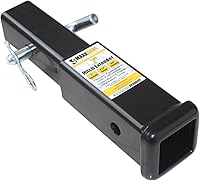
A hitch extender can affect the limits that apply to a rack setup. Read whether to use a hitch extender with a bike rack and follow both the vehicle and accessory instructions.
What counts toward tongue weight for a hitch rack?
Count the rack, bikes, and any other load carried by the hitch accessory. A cargo carrier’s cargo also adds to the load at the receiver.
The CyberRack S2 300 lb E-Bike Rack weighs 77.6 lb and has a 300 lb total capacity, or 150 lb per e-bike. Its own weight belongs in the hitch load calculation along with the bikes.
This rack fits a 2-inch receiver and accommodates e-bikes up to 5 inches wide with a wheelbase up to 52 inches. Those fit details do not change the vehicle’s tongue weight or payload limits.
For gear rather than bikes, the MaxxHaul 70108 Aluminum Hitch Cargo Carrier weighs 21.4 lb and has a 500 lb carrier capacity. Include the carrier and its cargo when checking the hitch load.
The carrier uses a 2-inch hitch shaft and is compatible with standard Class III and IV receivers. Its capacity does not mean every vehicle can carry 500 lb at the hitch.
How do you check whether your setup is within limits?
Compare the complete loaded setup with the lowest applicable rating. Check the vehicle manual, hitch label, and rack or carrier instructions before loading.
Write down the weight of the accessory and the items it will carry. For bikes, use their actual weights; for cargo, include the bags, bins, or other containers that travel on the carrier.
Also account for passengers and cargo inside the vehicle when checking payload. If a manual is unclear about a rack or carrier, ask the vehicle or hitch maker before using the setup.
What should you do if tongue weight is too high?
Reduce the load or choose a lighter accessory if the setup exceeds any rating. Removing cargo may bring the total within limits, but moving weight around does not change the published rating.
Do not assume a heavier duty rack fixes a vehicle or hitch limit. The rack, hitch, and vehicle each have their own requirements, and the lowest applicable one controls the setup.
A loaded carrier can also make vehicle handling and clearance worth checking before a trip. Our guide to choosing a hitch mounted cargo carrier covers fit and practical carrier decisions.
How should you use tongue weight when choosing a rack?
Choose a rack only after confirming that its weight plus the loaded bikes fits your vehicle and hitch limits. For cargo, add the carrier’s weight and cargo together, then check all applicable ratings.
A lighter rack leaves more room for the bikes within a tongue weight limit. A ramp or higher capacity can be useful for heavy e-bikes, but it does not raise the receiver’s limit.
If you’re deciding between a bike setup and another way to carry gear, use the vehicle and hitch ratings as your first filter. Then check receiver fit, accessory weight, bike or cargo fit, and access to the trunk.
Frequently asked questions
What does tongue weight mean on a hitch?
Tongue weight is the downward force a trailer’s coupler puts on the hitch ball, or that a hitch mounted rack and its load put on the receiver. It counts toward the vehicle’s payload and must stay within the limits set for the vehicle, hitch, and accessory.
Does a bike rack count toward tongue weight?
Yes. Count the bike rack’s weight along with the bikes when checking the load on the hitch.
Compare that total with the vehicle and hitch limits, and follow the rack maker’s instructions; a rack’s own capacity does not raise the vehicle’s tongue weight limit.
How do you measure tongue weight?
For a trailer, use a tongue weight scale or a suitable scale setup with the coupler at the same height it will sit when hitched. Keep the trailer level and follow the scale instructions.
For a hitch rack, use its weight plus the cargo weight to calculate the load.
Is tongue weight the same as towing capacity?
No. Towing capacity is the maximum trailer weight the vehicle may tow, while tongue weight is the downward load at the hitch.
Both limits matter, along with the hitch rating and vehicle payload.
Follow the lowest applicable limit in your vehicle and hitch instructions.