Will a Bike Rack Fit a 1.25-Inch Hitch?
Yes, a bike rack can fit a 1.25-inch hitch if its shank is made for a 1.25-inch receiver. Check the hitch class, rack instructions, and vehicle limits before choosing a rack or adapter.
On this page (7 sections)
- Will a bike rack fit a 1.25 hitch?
- Which bike racks fit a 1.25-inch hitch?
- Can you use a 2-inch rack with a 1.25-inch hitch?
- What limits should you check before loading bikes?
- How can an adapter change fit and clearance?
- What should you check before driving?
- Which setup should you choose for a 1.25-inch hitch?
Yes, a bike rack can fit a 1.25-inch hitch if its shank is made for a 1.25-inch receiver. Check the hitch class, rack instructions, and vehicle limits before choosing a rack or adapter.
Some racks fit both 1.25-inch and 2-inch receivers directly. Others need an adapter for a different receiver size, and compatibility depends on the hitch, vehicle, rack, and adapter working together.
Will a bike rack fit a 1.25 hitch?
A rack labeled for a 1.25-inch receiver can fit that receiver directly, provided your hitch class and vehicle are also allowed by the rack's instructions. Receiver size is only one part of the fit.
Check the hitch label or manual for its class and tongue-weight limit. Then check the rack instructions for the receiver size and hitch classes it accepts.
If your vehicle manual sets a lower limit, follow that limit.
For help identifying the receiver opening, follow our guide to how to measure your hitch size. If you aren't sure what the hitch class means, read Class 2 vs Class 3 hitch for racks and carriers.
What does a 1.25-inch receiver measure?
A nominal 1.25-inch receiver has an opening about 1.25 inches wide and tall. Measure the inside of the square opening, and check the hitch label or paperwork to confirm the receiver size and class.
Don't use the outside width of the hitch tube as your measurement. If the opening is hard to measure or the hitch has no label, ask the hitch manufacturer or a qualified installer to identify it.
Which bike racks fit a 1.25-inch hitch?
Choose a rack whose instructions explicitly include a 1.25-inch receiver. These options include racks made for 1.25-inch hitches and models that fit both 1.25-inch and 2-inch receivers.
The Allen Sports 3-Bike Hitch Rack is a direct-fit option for either listed receiver size. Its tie-down system secures each bicycle, and its carry arms fold out of the way when the rack isn't in use.
The Thule Outpace 2 Platform Hitch Rack fits both receiver sizes and carries up to two bikes. Its moveable head adjusts to different bike sizes and frame shapes, and the rack tilts down for trunk access.
The Swagman XTC2 transports one or two bikes and fits 1.25-inch or 2-inch receivers. Its published capacity is 35 lb per bike, with a maximum tire width of 2.5 inches.
Can you use a 2-inch rack with a 1.25-inch hitch?
You may be able to use a 2-inch rack with a 1.25-inch hitch through an adapter, but only when the hitch, vehicle, rack, and adapter instructions allow that setup. Confirm the adapter is designed for your hitch class and rack shank.
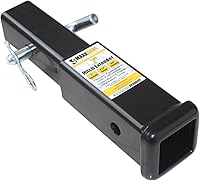
The MaxxHaul adapter is designed for Class I and II 1.25-inch receivers and accepts 2-inch accessories. It adds 9 inches of reach, so check the rack's instructions and your vehicle's limits before using it.
An adapter doesn't raise the hitch or vehicle's weight rating. The weight allowed for the combined setup can be lower than any one component's stated limit, so follow the most restrictive instructions and ratings.
What limits should you check before loading bikes?
Check the hitch, vehicle, and rack limits, then include the rack's own weight in your load calculation. The smallest applicable limit controls how much weight you can carry.
A hitch's tongue-weight rating describes the vertical load it can support. Add the rack's weight to the bikes' combined weight, then compare that total with the hitch and vehicle limits.
The rack's own limit still applies, too.
Our guide to tongue weight on a hitch explains what to check. Don't assume a stronger rack increases the capacity of the hitch or vehicle.
Account for bike weight, including batteries and accessories on an e-bike. If your bikes are heavy, compare the rack's per-bike and total limits with their actual weights before loading them.
How can an adapter change fit and clearance?
An adapter adds length behind the vehicle, which can change clearance and leverage on the hitch. Check the rack and adapter instructions for any limits or fit restrictions, and make sure the installed rack clears the bumper and rear hatch.
That extra reach can help an accessory clear a bumper, but it can also move the load farther from the receiver. Don't assume the adapter's own capacity is the allowed capacity of the entire rack setup.
For more on the trade-offs, see whether to use a hitch extender with a bike rack. If you want to compare designs before choosing, review the types of hitch bike racks.
What should you check before driving?
Secure the rack and bikes according to their instructions, then check that the load doesn't block lights or the license plate. Make sure pins, straps, and frame or wheel supports are in place before each trip.
After loading, check the rack and bikes for movement. Stop if anything shifts, rubs against the vehicle, or comes loose, and correct the fit before driving again.
Use the rack's instructions for loading order and bike placement. If the rack or adapter instructions don't clearly approve your combination, contact the maker before using it.
Which setup should you choose for a 1.25-inch hitch?
Choose a rack made for a 1.25-inch receiver when you want the simplest path to compatibility. The Allen, Thule, and Swagman options above each include 1.25-inch fit in their product details.
Consider an adapter only if you need to use a 2-inch rack and the relevant instructions allow it. For either setup, confirm hitch class, weight limits, clearance, and vehicle guidance before loading bikes.
If you're still comparing rack styles, start with the types of hitch bike racks and choose a model whose fit and capacity match your vehicle and bikes.
Frequently asked questions
Will any 1.25-inch bike rack fit my hitch?
No. The rack must be made for your receiver size, and its instructions must allow your hitch class and vehicle.
Check the receiver opening, hitch label, rack shank, and vehicle limits before buying.
A rack that fits the opening may still exceed a weight limit or conflict with the vehicle's instructions.
Can I use a 2-inch bike rack on a 1.25-inch hitch?
Only if the rack maker permits an adapter and the adapter fits your hitch class and rack. Adapters add length and can affect clearance and weight limits, so check the hitch, vehicle, rack, and adapter instructions together.
A rack made for both receiver sizes may be a simpler fit.
Are 1.25-inch hitches safe for bike racks?
A 1.25-inch hitch can carry a bike rack when the hitch, vehicle, and rack are compatible and the load stays within their limits. Confirm the hitch class and tongue-weight rating, then include the rack and bikes in your calculations.
Follow each maker's installation and use instructions.
How do I measure a 1.25-inch hitch receiver?
Measure the inside width and height of the square receiver opening, not the outside of the hitch tube. A nominal 1.25-inch receiver should measure about 1.25 inches across its opening.
Also check the hitch label or manual for class and weight limits; our hitch-size measuring guide explains the steps.