How to Measure Your Hitch Size Before You Buy
To measure hitch size, measure the inside width and height of the receiver opening. Then check the accessory shank size and your hitch's class and weight limits before buying.
On this page (8 sections)
- How do you measure hitch size?
- What else should you check besides the opening?
- How do you check whether the accessory shank will fit?
- How do you measure clearance behind the vehicle?
- Which bike racks are made for different receiver sizes?
- What should you do if you can't identify the hitch size?
- How do you measure hitch size before you buy?
- Frequently asked questions
To measure hitch size, measure the inside width and height of the receiver opening. Then match that opening to the accessory shank, and check the hitch class and weight limits before buying.
The measurement helps answer one part of fit. Your receiver label or vehicle manual can also tell you the hitch class and ratings, while the rack or carrier instructions show which receiver sizes it accepts.
How do you measure hitch size?
Measure the opening inside the receiver, from wall to wall. Use a tape measure or ruler to check both the horizontal width and vertical height.
Measure the square opening itself, not the outside of the metal receiver tube. Record the result in inches, and compare it with the accessory's shank size.
Common receiver openings include 1.25 in and 2 in. If your measurement seems between those sizes, measure again and consult the hitch label, installation paperwork, or vehicle manual before ordering.
What else should you check besides the opening?
Check the hitch class, weight ratings, and accessory instructions. The receiver size alone doesn't tell you how much weight your vehicle and hitch can carry.
Look for a label on or near the receiver. If it is missing or hard to read, check the vehicle manual or contact the hitch manufacturer with the hitch model.
A bike rack or cargo carrier adds weight behind the vehicle. Follow the lowest applicable rating among the vehicle, hitch, adapter, and accessory, and account for the combined weight of the carrier and its load.
Our guide to Class 2 vs Class 3 hitches explains why hitch class matters when choosing racks and carriers.
How do you check whether the accessory shank will fit?
Compare the accessory's stated shank size with your receiver measurement. A 2 in shank won't fit directly into a 1.25 in receiver, and a smaller shank may move inside a larger receiver unless the setup uses a compatible sleeve or adapter.
Check the accessory instructions for accepted receiver sizes and any limits on adapters. If the maker doesn't allow an adapter, choose an accessory made for your receiver instead.
For a bike rack, see whether a bike rack fits a 1.25-inch hitch for more on receiver and rack compatibility.
Can an adapter change the receiver size?
An adapter can let some accessories with a 2 in shank connect to a 1.25 in receiver. It doesn't increase the hitch or vehicle's weight rating, and it may affect how the setup can be used.
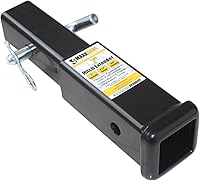
The MaxxHaul 1.25 to 2 Inch Hitch Adapter is made for Class I and II 1.25 in square receivers and accepts 2 in shank accessories. It adds 9 in of reach and is intended for hitch accessories, not trailer towing.
Check the hitch, vehicle, rack, and adapter instructions together before using one. The adapter's stated capacity doesn't replace the ratings for the rest of the setup.
How do you measure clearance behind the vehicle?
Check the space between the receiver, bumper, and accessory. A correct opening size doesn't guarantee a rack or carrier will clear a spare tire, liftgate, or bumper.
Measure how far the receiver sits from the bumper and note anything mounted near it. Compare that space with the accessory's shank length and instructions.
The Young 2-Bike Foldable Platform Rack is designed for 2 in receivers. Its instructions also specify top-tube frames and a limit of 40 lb per bike, so check both fit and bike compatibility.
If you need more clearance, read whether to use a hitch extender with a bike rack. An extender changes how far the rack sits from the vehicle, but doesn't raise the hitch's rating.
Which bike racks are made for different receiver sizes?
Choose a rack whose instructions match your measured receiver. Some racks are made for one size, while others are designed to fit more than one.
The VEVOR 2-Bike Platform Rack, 1.25 or 2 Inch is designed for either 1.25 in or 2 in receivers. It has an 80 lb total capacity, with up to 40 lb per bike, and accepts tires up to 2.4 in wide.
Check vehicle fit and hitch ratings too. VEVOR's receiver compatibility doesn't confirm that every vehicle or bike setup is suitable.
For more options, compare types of hitch bike racks before you choose a style.
What should you do if you can't identify the hitch size?
Pause before buying if the opening measurement and hitch label don't agree. Recheck the measurement and look for the hitch model or installation paperwork.
A hitch may be covered by a trim panel, hard to reach, or worn enough that the edges are difficult to measure. The vehicle manual can help you find the hitch information, but verify that it applies to the hitch currently installed.
Avoid guessing from the vehicle's make or model. Different hitch options and installations can change what receiver is on the vehicle.
How do you measure hitch size before you buy?
To measure hitch size, record the receiver's inside width and height, then match the accessory shank and check all ratings. Use the hitch label or manual to confirm class and weight limits, and account for clearance around the bumper and any spare tire.
Choose the Young rack if you have a compatible 2 in receiver and top-tube bikes within its limits. Choose the VEVOR rack if your receiver measures 1.25 or 2 in and the bike and vehicle setup meets its instructions; consider the MaxxHaul adapter only when all parts allow it.
If a rack is your next purchase, browse bike racks for SUVs to compare hitch options. For cargo carriers, start with how to choose a hitch-mounted cargo carrier.
Frequently asked questions
Is hitch size measured inside or outside?
Measure the opening inside the receiver, from one inside wall to the other, in both directions. The accessory shank fits inside this opening, so outside measurements include the receiver walls and don't show the usable size.
Check your reading against the hitch label or manual.
Can I use an adapter to fit a 2-inch rack on a 1.25-inch hitch?
Some adapters let a 2 in shank accessory connect to a 1.25 in receiver. Check the instructions for the hitch, vehicle, adapter, and rack before using one, since an adapter doesn't increase any weight rating and may be restricted for some setups.
How do I know if my hitch is 1.25 or 2 inches?
Measure the inside width and height of the receiver opening and compare both measurements with the hitch label or manual. Common receiver sizes include 1.25 in and 2 in.
If the measurement is unclear, confirm the hitch model before buying an accessory.
Does hitch size tell me how much weight I can carry?
No. Receiver size describes the opening, not the full weight limit for your setup.
Check the vehicle, hitch, and accessory ratings, including any adapter, and follow the lowest applicable limit for the loaded rack or carrier.
Frequently asked questions
How do I measure hitch receiver size?
Measure the receiver opening from inside wall to inside wall, both across and vertically. Compare those measurements with the accessory shank size, commonly 1.25 or 2 inches, and check the hitch label or manual for its class and weight ratings before buying.
Is hitch size measured inside or outside?
Measure the inside of the receiver opening because the accessory shank fits inside it. Outside measurements include the receiver walls and won't tell you the opening size.
Use a tape measure or ruler, and check the result against the hitch label or vehicle manual.
How do I know if my hitch is 1.25 or 2 inches?
Measure the receiver's inside opening in both directions. A common receiver size is 1.25 inches or 2 inches, but confirm the measurement and check your hitch label or manual.
The accessory must match the receiver unless an appropriate adapter is allowed for that setup.
Can I use an adapter to fit a 2-inch rack on a 1.25-inch hitch?
Some adapters convert a 1.25-inch receiver to accept a 2-inch accessory shank, but compatibility alone doesn't confirm the setup is safe. Check the adapter, hitch, vehicle, and rack instructions for allowed use and weight limits, and account for any restrictions on adapters.